General
WPC vs PVC Board: Which Should You Choose?
By BestWood
October 30, 2026
124 Views
Both WPC and PVC boards are excellent, waterproof, termite-proof interior materials - the right choice depends on the application. Choose PVC foam board for kitchens, bathrooms, wardrobes, and moisture-heavy furniture, where its lightweight, fully waterproof build excels. Choose WPC board for wall panels, doors, partitions, and decorative surfaces, where its extra strength and wood-like finish shine. Both outperform plywood and MDF in humidity. Bestwood manufactures both WPC and PVC boards in Kerala, so you can match the right board to each use.
WPC and PVC boards are the two most popular modern alternatives to plywood - both waterproof, both termite-proof, both built for humid climates. So when it's time to choose, people naturally ask: which one is actually better, and which should I use?
The honest answer is that neither is "better" overall - they're suited to different jobs. This guide compares WPC and PVC boards on the factors that matter and shows exactly which board to choose for each part of your home or project.
What is a PVC Board?
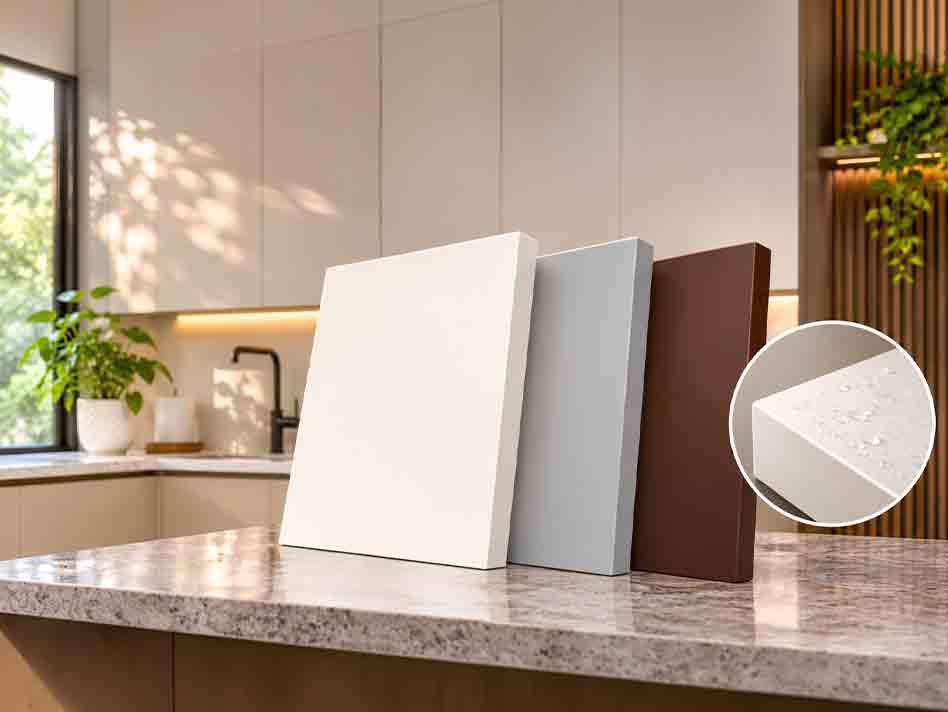
A PVC (polyvinyl chloride) foam board is a lightweight, rigid sheet with a closed-cell foam core. It is fully waterproof, termite-proof, and has a smooth, often ready-to-use surface that needs no compulsory lamination.
Strengths: 100% waterproof, lightweight, smooth finish, easy to fabricate.
Best for: kitchens, bathrooms, wardrobes, cabinets, and moisture-prone furniture.
What Is a WPC Board?
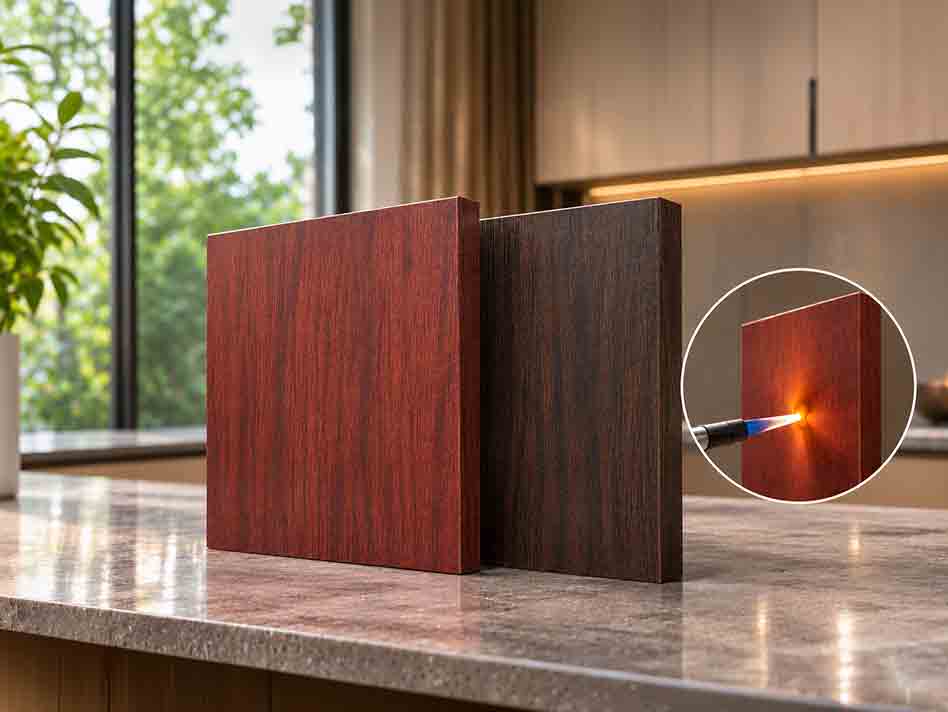
A WPC (Wood Plastic Composite) board combines wood fibre with thermoplastic polymers, giving the warmth and feel of wood with the durability of plastic. It is strong, moisture-resistant, termite-proof, and dimensionally stable.
Strengths: high strength, wood-like finish, rigid and stable, versatile.
Best for: wall panels, doors, partitions, feature surfaces, and decorative work.
WPC vs PVC Board: Full Comparison
|
Factor |
PVC Foam Board |
WPC Board |
|
Waterproof |
100% |
High |
|
Termite-proof |
Yes |
Yes |
|
Weight |
Lightweight |
Medium |
|
Strength |
Good (high density) |
Very good |
|
Surface finish |
Smooth, ready-to-use |
Wood-like, textured options |
|
Screw-holding |
Strong (high density) |
Very strong |
|
Finish options |
Solid colour, laminate-ready |
Wood, stone, marble textures |
|
Best for |
Kitchens, baths, wardrobes |
Panels, doors, furniture |
|
Fabrication |
Very easy |
Easy |
Both are first-class interior materials - the differences point you to the right use rather than a clear "winner."
Which Should You Choose?
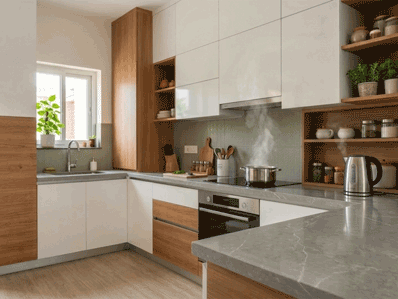
Modular kitchens - Choose PVC foam board. Its full waterproofing handles steam, spills, and humidity perfectly for cabinet carcasses and shutters.
Bathrooms - Choose PVC foam board. Zero swelling in constant moisture makes it ideal for vanities and storage.
Wardrobes - PVC foam board (especially high-density) for waterproof, screw-holding carcasses; WPC also works well where extra rigidity is wanted.
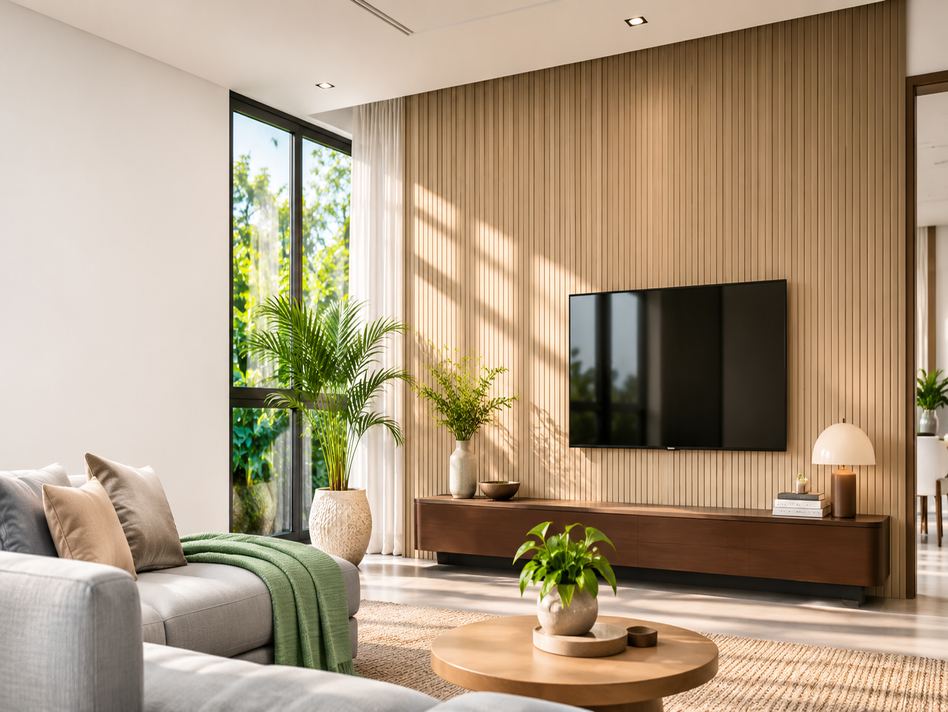
Wall panels & feature walls - Choose WPC board. Its strength and wood/stone/marble textures make it the better decorative surface.
Doors & partitions - Choose WPC board. Its rigidity and dimensional stability suit load-bearing, upright applications.
Furniture - Either works; pick PVC for lighter, moisture-exposed pieces and WPC for stronger, decorative builds.
Cost and Value
Both WPC and PVC boards cost more upfront than plywood or MDF, but deliver far better lifetime value in humid climates - no swelling, no termite treatment, and minimal maintenance. Between the two, pricing varies by grade, density, and thickness, so the smarter comparison is matching the right board to the job rather than choosing on price alone. The wrong board in the wrong place costs more over time, whatever its sticker price.
Conclusion
So, WPC vs PVC board - which should you choose? Choose PVC foam board for moisture-heavy areas like kitchens, bathrooms, and wardrobes, and choose WPC board for strength and decorative surfaces like wall panels, doors, and partitions. Both are waterproof, termite-proof, and far superior to plywood and MDF in Indian conditions - the key is matching each board to its ideal use.
Bestwood manufactures both WPC and PVC boards in Kerala, so you can use the right board for every part of your project. Explore the range or download the catalogue to choose the right board for your interiors.
Latest Blogs