General
Can PVC Foam Board Handle Heat and Steam in Kitchens?
By BestWood
October 23, 2026
9 Views
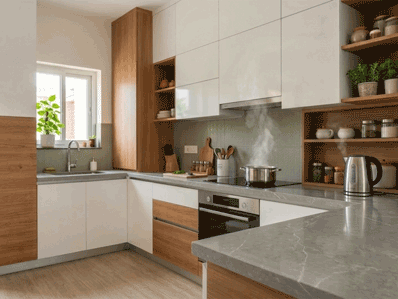
PVC foam board handles the everyday heat and steam of a kitchen very well. Its waterproof, closed-cell structure shrugs off cooking steam, humidity, and spills without swelling or warping, which is exactly where plywood and MDF fail. It stays stable under normal kitchen temperatures, so cabinets, shutters, and under-sink units last for years. The one precaution: keep it away from direct flame and very hot surfaces, as with any interior board. Bestwood's high-density PVC foam boards are built for Indian kitchen conditions.
A kitchen is the toughest room in any home for cabinet materials. Between steam rising off the stove, humidity, water around the sink, and heat from appliances, the board behind your cabinets takes a constant beating. So before choosing PVC foam board for a kitchen, it's fair to ask: can it actually handle the heat and steam?
This guide answers that directly - how PVC foam board copes with kitchen heat, steam, and moisture, where it genuinely excels, and the simple precautions that keep it performing for years.
Steam and Humidity: Where PVC Foam Board Excels
The biggest everyday threat in a kitchen isn't dry heat - it's steam and moisture. Boiling pots, kettles, dishwashers, and sink splashes fill a kitchen with humidity, and this is precisely what destroys wood-based boards.
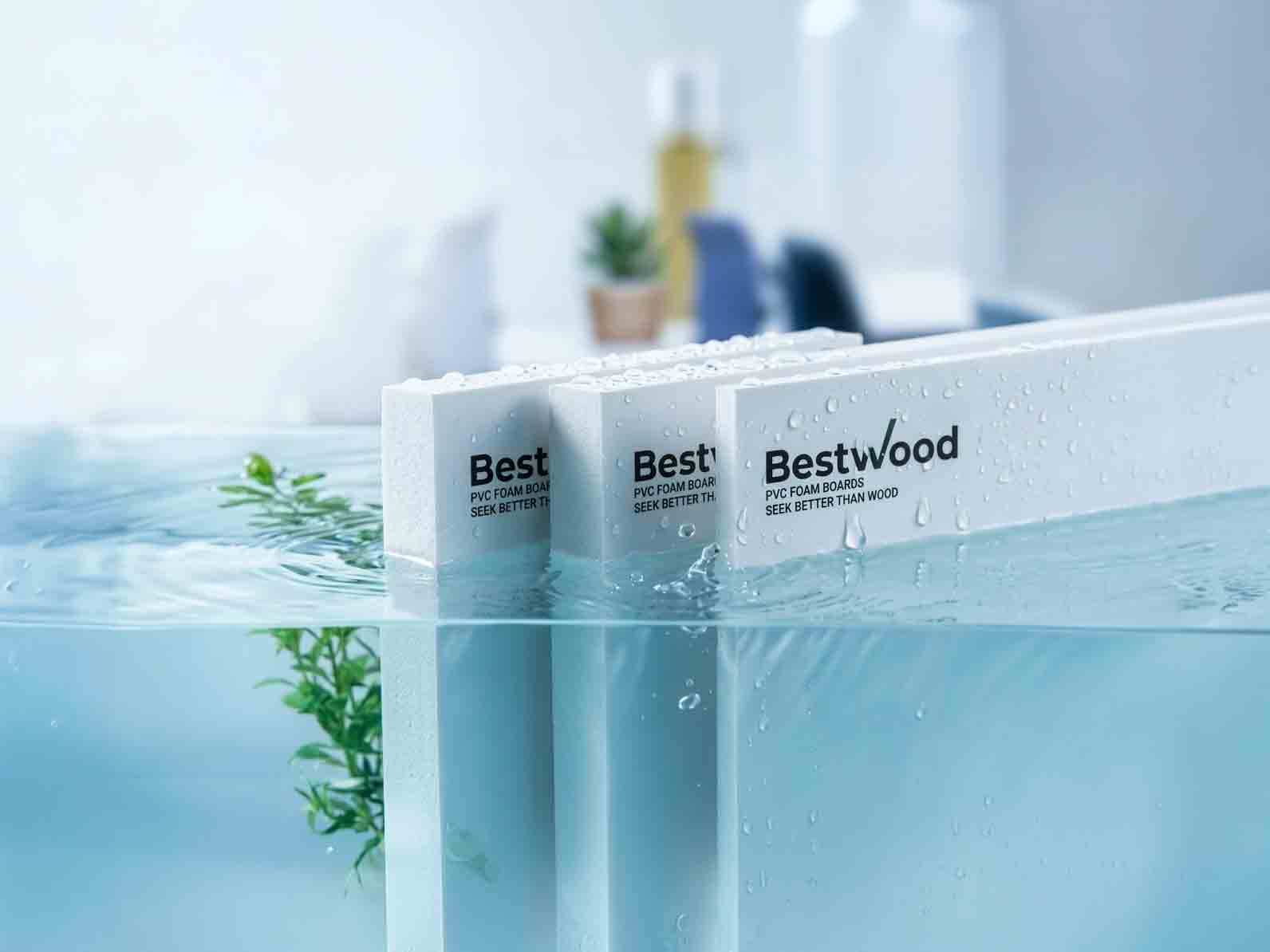
PVC foam board is made from polyvinyl chloride with a closed-cell core, so it is fully waterproof. Steam and humidity simply can't soak in:
- No swelling from steam or splashes
- No warping of shutters or cabinet bases
- No musty smell or mould growth
- No delamination the way plywood suffers
This is the core reason PVC foam board has become a go-to for modular kitchens - it thrives in exactly the humid, steamy conditions that ruin plywood and MDF.
How PVC Foam Board Handles Heat
For normal kitchen use, PVC foam board handles heat comfortably. The ambient warmth of a working kitchen, heat from nearby appliances, and the occasional warm surface are all well within its range, and it stays stable and dimensionally true.
Like all PVC-based materials, it does have a softening point at high temperatures, so the sensible rule is simple: keep it away from direct flame and very hot surfaces - a hot pan straight off the burner, for instance. This is standard practice for any interior board, including plywood and laminates, and is easily managed in a normal kitchen layout.
In short: for everyday cooking heat, PVC foam board is dependable; it just shouldn't be used as a trivet or placed against a direct heat source.
PVC Foam Board vs Plywood vs MDF in a Kitchen
|
In kitchen conditions |
PVC Foam Board |
Plywood |
MDF |
|
Steam & humidity |
Excellent - waterproof |
Poor - swells |
Very poor - swells badly |
|
Water splashes |
Unaffected |
Absorbs, warps |
Absorbs, crumbles |
|
Everyday heat |
Handles well |
Handles well |
Handles well |
|
Direct flame / very hot surface |
Avoid |
Avoid (scorches) |
Avoid |
|
Termite resistance |
Yes |
Needs treatment |
No |
|
Long-term in kitchens |
Excellent |
Limited |
Poor |
For the conditions a kitchen actually throws at a board day-to-day - steam, humidity, and water - PVC foam board clearly outperforms both wood-based options.
Where PVC Foam Board Works Best in a Kitchen
A high-density PVC foam board is ideal for:
- Cabinet carcasses - the structural body, kept waterproof and stable
- Shutters - stay flat and aligned despite steam and humidity
- Under-sink units - the dampest zone, where plywood fails fastest
- Drawers and storage - durable and easy to wipe clean
- Kitchen partitions and panels - lightweight and moisture-proof
Simple Tips for Using PVC Foam Board in Kitchens
- Keep it away from direct flame and very hot surfaces - maintain normal clearance around the hob.
- Use it freely in high-moisture zones - under-sink and around the dishwasher are where it shines.
- Choose a high-density board for strong screw-holding and durability.
- Pick the right thickness - thicker, high-density boards for carcasses and shelves.
- Wipe clean - spills and grease wipe off its smooth surface easily.
Used sensibly, PVC foam board gives a kitchen years of low-maintenance, moisture-proof performance.
Conclusion
So, can PVC foam board handle heat and steam in kitchens? Yes - it handles everyday kitchen heat well and is outstanding against steam, humidity, and water, the conditions that actually destroy plywood and MDF. The only precaution is to keep it away from direct flame and very hot surfaces, which is simple to manage in any kitchen. For a modular kitchen built to last in India's climate, it's a dependable, waterproof, termite-proof choice.
Bestwood manufactures high-density PVC foam boards in Kerala, engineered for the heat, steam, and humidity of Indian kitchens. Explore the range or download the catalogue to choose the right board for your project.
Latest Blogs