General
How Fire-Resistant Are WPC and PVC Boards Safety Facts Explained
By BestWood
November 07, 2026
71 Views
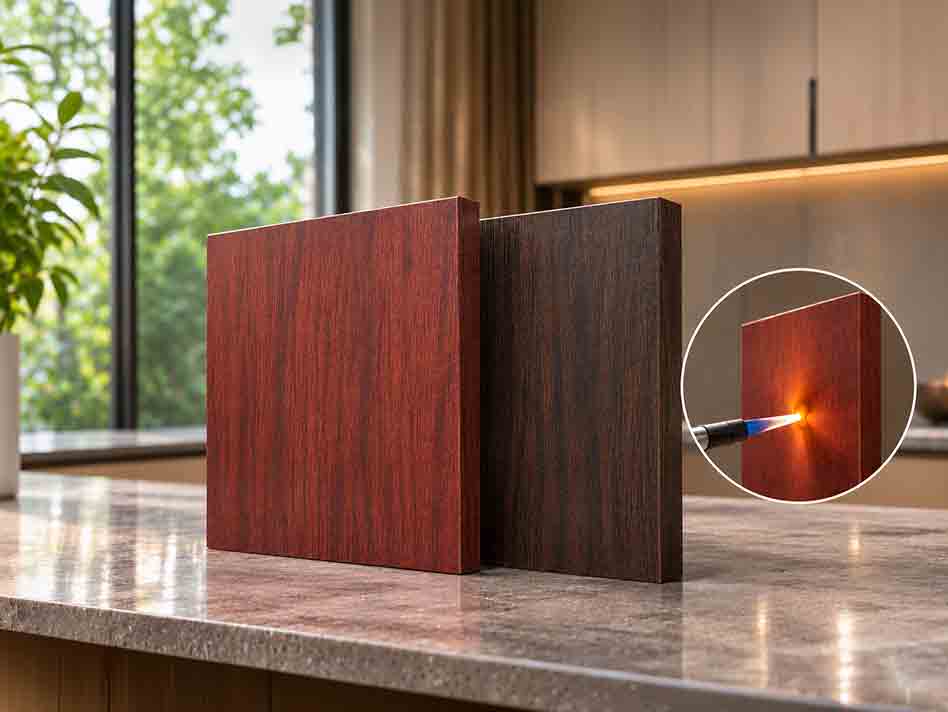
WPC and PVC boards are fire-retardant and self-extinguishing, though not fireproof. PVC foam board, in particular, resists ignition and does not sustain a flame; when the fire source is removed, it tends to stop burning on its own, unlike wood or plywood, which keep burning and spread fire. This makes WPC and PVC boards a safer interior material for homes, offices, and commercial spaces. Quality PVC foam boards meet recognised fire-safety standards such as UL 94 V-0 and BS 476 Class 1.
Fire safety is one of the most overlooked factors when choosing an interior board - until it matters most. Most buyers compare waterproofing, strength, and finish, but rarely ask how a material behaves when exposed to flame.
So how fire-resistant are WPC and PVC boards, really? This guide gives you the honest facts: how these boards react to fire, what "flame-retardant" and "self-extinguishing" actually mean, what the common fire ratings tell you, and how they compare to plywood for safety in homes and commercial interiors.
Fire-Resistant vs Fireproof: An Important Difference
First, a key distinction, because the two terms are often confused:
- Fireproof - will not burn or be affected by fire at all. Very few building materials are truly fireproof.
- Fire-resistant/flame-retardant - resists catching fire, slows flame spread, and does not sustain burning on its own.
WPC and PVC boards fall firmly into the fire-resistant/flame-retardant category. They are not fireproof - no interior board of this type is - but they behave far more safely in a fire than wood-based materials.
How PVC Foam Board Behaves in Fire
PVC (polyvinyl chloride) is naturally flame-retardant. A quality PVC foam board:
- Resists ignition - it does not catch fire easily
- Is self-extinguishing - when the flame source is removed, it tends to stop burning rather than keep burning
- Slows flame spread - it does not feed a fire the way dry timber does
- Does not drip burning material - in well-made, graded boards
This self-extinguishing behaviour is the single most important safety advantage: in a fire, a PVC foam board is far less likely to help the fire grow and spread than plywood or solid wood.
How WPC Board Behaves in Fire
WPC (Wood Plastic Composite) combines wood fibre with thermoplastic. Its fire behaviour depends on the mix and any added fire-retardant treatment, but good-quality WPC boards are more fire-resistant than plain wood or plywood because the plastic component resists ignition and slows flame spread. For fire-sensitive applications, choose a WPC grade with a stated fire rating.
What the Fire Ratings Mean
Fire ratings are how you verify a board's real performance rather than trusting marketing words. Two common ones:
|
Standard |
What it measures |
A strong result |
|
UL 94 |
How a plastic burns / self-extinguishes |
V-0 (best common rating - stops burning quickly, no flaming drips) |
|
BS 476 |
Surface spread of flame |
Class 1 (lowest flame spread) |
When a manufacturer states ratings like UL 94 V-0 or BS 476 Class 1, it means the board has been tested to resist flame and limit spread. Always ask for the actual rating of the specific board and grade.
WPC & PVC vs Plywood: Fire Safety Compared
|
Factor |
PVC Foam Board |
WPC Board |
Plywood |
|
Catches fire easily? |
No |
Resists |
Yes |
|
Self-extinguishing? |
Yes |
Often |
No |
|
Feeds/spreads fire? |
Minimal |
Low |
Yes |
|
Fire rating available? |
Yes (e.g. UL 94 V-0) |
Grade-dependent |
Limited |
|
Overall fire safety |
High |
Good–high |
Low |
For fire safety, WPC and PVC boards clearly outperform plywood and solid wood, which ignite readily and sustain burning.
Where Fire Safety Matters Most
Choosing a fire-resistant board is especially important in:
- Kitchens - the highest fire-risk room in a home
- Commercial and office interiors - where building fire codes apply
- Retail and public spaces - malls, showrooms, clinics
- High-rise apartments - where flame spread between units is a serious concern
- Electrical and utility areas - near wiring and appliances
In these spaces, a self-extinguishing board adds a meaningful layer of safety.
Using WPC and PVC Boards Safely
Fire-resistant does not mean careless use. Sensible practice:
- Ask for the fire rating (UL 94, BS 476) of the exact board and grade.
- Keep any board away from direct flame and very hot surfaces.
- Follow building fire codes for commercial and high-rise projects.
- Choose graded, quality boards from an established manufacturer - cheap, ungraded boards may not perform as claimed.
Conclusion
So, how fire-resistant are WPC and PVC boards? They are flame-retardant and self-extinguishing - not fireproof, but far safer than plywood or solid wood. PVC foam board resists ignition and stops burning when the flame is removed, and quality boards carry recognised fire ratings like UL 94 V-0 and BS 476 Class 1. For kitchens, offices, and commercial interiors where fire safety matters, they are a smart, responsible choice.
Bestwood manufactures high-quality PVC foam boards and WPC boards in Kerala, built for safety and durability. Explore the range or download the catalogue to check the fire ratings and specifications for your project.
Latest Blogs