General
Which PVC Foam Boards Are Best for Furniture Making
By BestWood
August 07, 2026
336 Views
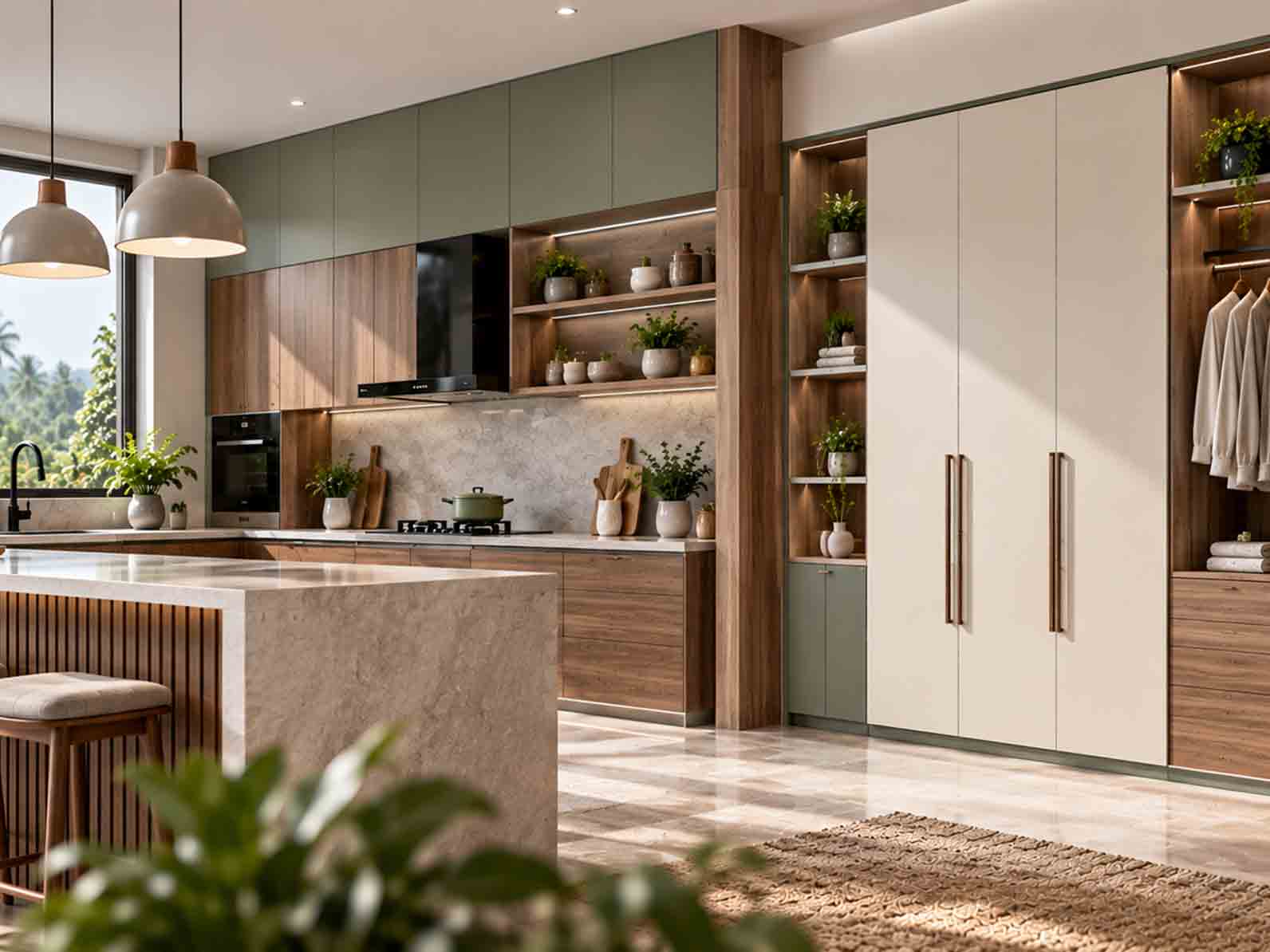
The best PVC foam boards for furniture are high-density boards (around 0.55 - 0.7 g/cc) in 16 - 18 mm thickness for structural parts like cabinet carcasses and wardrobe shelves, and 5 - 10 mm for shutters, panels, and lighter elements. Density matters more than any other single factor. A low-density board may look identical on the shelf but won't hold screws, bear load, or last. For furniture specifically, choose a dense, uniform-cell board from a manufacturer that controls quality batch to batch, such as Bestwood's High-Density White Board or Colour Board.
If you're building modular kitchens, wardrobes, or cabinets and want them to survive Kerala's humidity for decades, the rest of this guide explains exactly what to look for.
First, why PVC foam boards for furniture at all?
Plywood and MDF have carried Indian furniture for generations, but they share a weakness: they're made of wood, so they swell, warp, rot, and attract termites in humid and monsoon-heavy regions. PVC foam board sidesteps all of that. It's a lightweight board made from polyvinyl chloride with a foamed (closed-cell) core, and for furniture it brings a specific set of advantages:
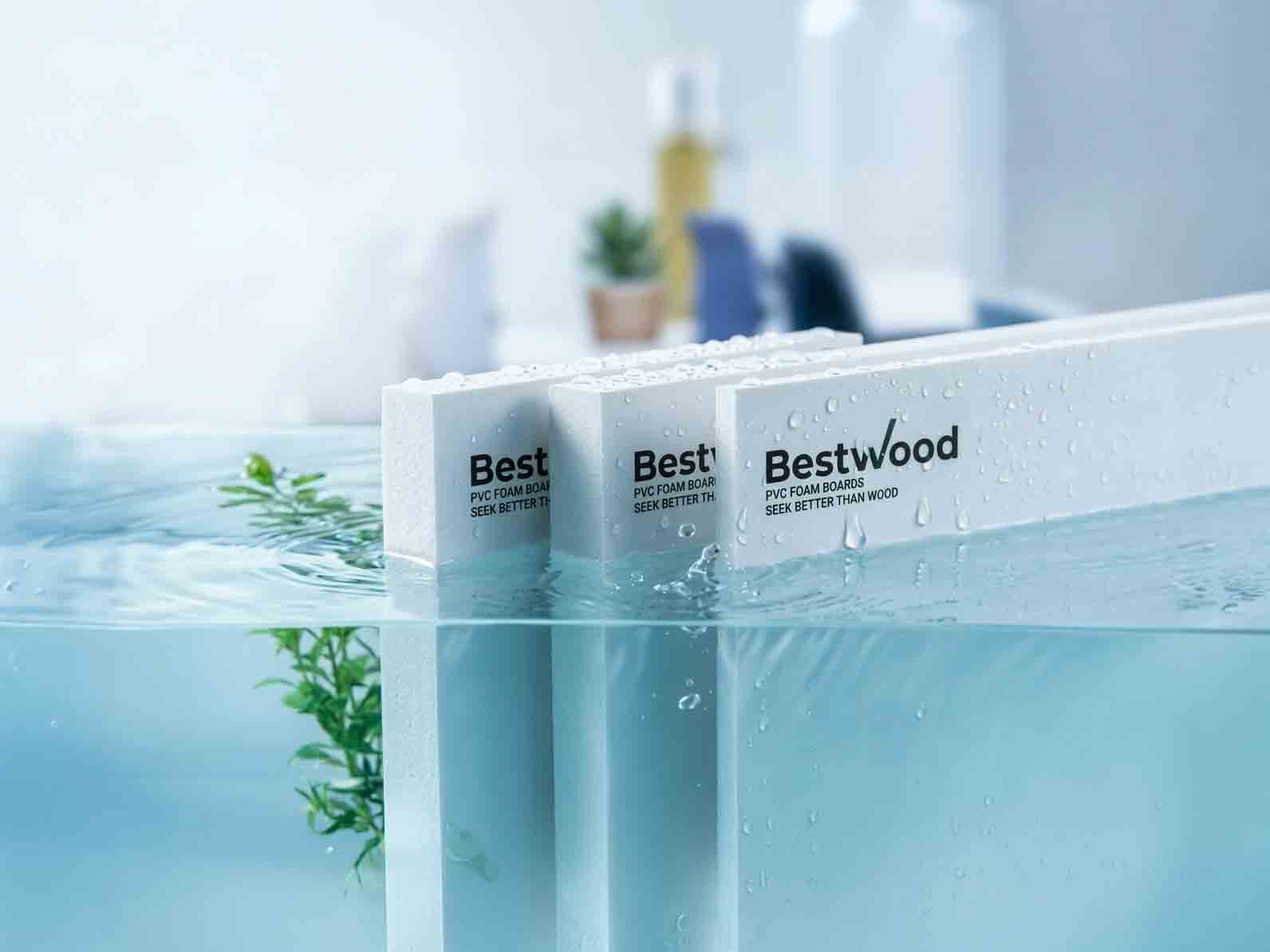
- 100% waterproof - no swelling in kitchens, bathrooms, or coastal humidity
- Termite- and borer-proof - without chemical treatment
- Dimensionally stable - resists warping over time
- Fabrication-friendly - cuts, drills, routes, and laminates like wood, on the same tools
- Ready-to-use surface - often needs no lamination
- Lightweight - easier to handle and install than plywood
That combination is why architects, interior designers, and furniture manufacturers increasingly specify it. But "PVC foam board" covers a wide quality range, and furniture is one of the most demanding uses. Here's how to choose well.
The 5 things that decide if a PVC foam board is good for furniture
1. Density - the single most important spec
This is the factor most buyers overlook and every good carpenter cares about. PVC foam boards are sold in different densities, usually measured in grams per cubic centimetre (g/cc). Broadly:
- Below 0.5 g/cc (low density): light, cheap, and fine for signage or display - but too soft for furniture. Screws strip, edges dent, and load-bearing shelves sag.
- 0.55 - 0.7 g/cc (high density): firm, strong screw-holding, holds hinges and load. This is the range you want for furniture.
A high-density board holds fasteners securely, resists denting, and supports weight, which is exactly what a cabinet or wardrobe demands. Many imported boards quietly cut density to cut cost, which is why some sellers report customer complaints about "poor density." When you buy, ask for the actual density figure, not just the brand name.
2. Thickness - match it to the job
Thickness should follow function:
|
Furniture element |
Recommended thickness |
|
Cabinet carcass/wardrobe body |
16 - 18 mm |
|
Shelves & load-bearing partitions |
16 - 18 mm |
|
Shutters & door panels |
12 - 18 mm (by design/weight) |
|
Wall panels, decorative facing |
5 - 10 mm |
|
Drawer bottoms, backing |
5 - 8 mm |
Using a board that's too thin to save money is a false economy; it shows up as sagging shelves and loose hinges within a year.
3. Cell structure & uniformity
A quality furniture-grade board has a fine, uniform closed-cell structure all the way through, with consistent density edge to edge and sheet to sheet. Uneven or coarse cells mean weak spots, poor screw hold, and rough machined edges. Consistency across every sheet is a hallmark of controlled manufacturing rather than cheap import batches.
4. Surface quality & finishing
For furniture, you want a smooth, hard surface that's ready to use or takes finishing well. Better boards offer:
- High surface hardness on both faces
- A clean white (or pigmented colour) that needs no compulsory lamination
- Compatibility with lamination, veneer, paint, and CNC engraving when you do want a custom look
A board that laminates and bonds cleanly saves labour and gives a more durable final product.
5. Manufacturer & consistency
Because density and cell structure aren't visible to the eye, the manufacturer's quality control is what protects you. A locally manufactured board made to a consistent standard beats an unbranded import where "the importer just uses their name as a brand." Look for a maker with real quality assurance, a stated warranty/lifespan, and a track record with carpenters and dealers.
So, which PVC foam boards are best for furniture making?
Putting it together, the best furniture-grade PVC foam sheet is: high density (0.55 - 0.7 g/cc), correct thickness for the part (16 - 18 mm for structure), fine uniform cell structure, a hard, ready-to-use surface, and consistent manufacturing quality.
Among Indian options, Bestwood, manufactured by Polyon Industries in Thrissur, Kerala, is built to exactly these furniture requirements:
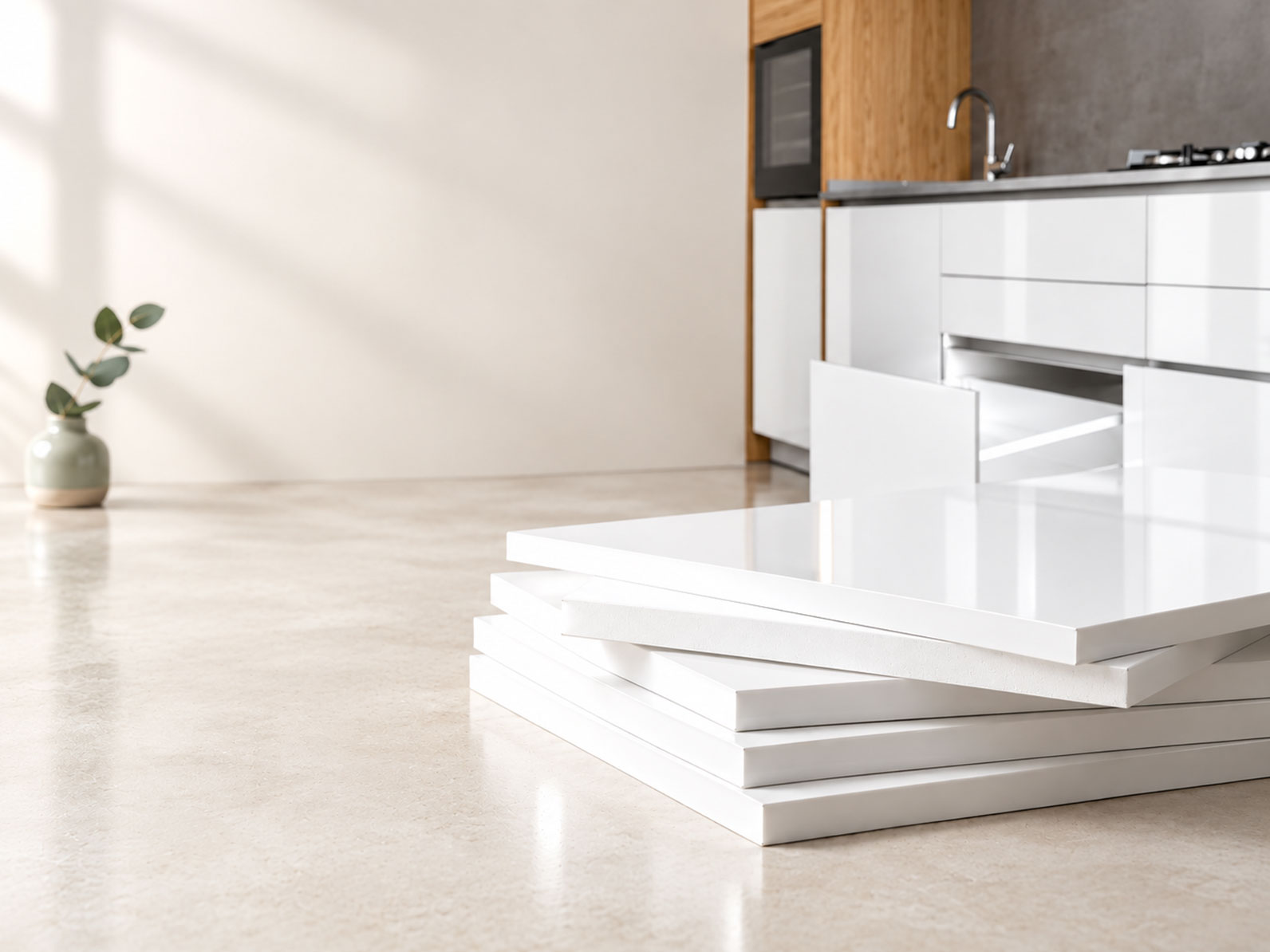
- Bestwood White Board (High-Density PVC Foam Board): high surface hardness on both sides and, unlike conventional plywood or MDF, no compulsory lamination for most end uses. A strong default for cabinet carcasses, wardrobes, and shutters.
- Bestwood Colour Board (High-Density PVC Foam Board): the same high-density base with pigment blended in during manufacturing, so you get through-colour boards for finished furniture without laminating.
- BESTLAM Lamination Board: layered, moisture-resistant engineered board for applications needing extra structural build-up.
- WPC Board: a wood-plastic composite option where a wood-like feel is preferred.
Bestwood boards are 100% waterproof, termite-proof, flame-resistant, dent- and abrasion-resistant, and made with a fine, consistent cell structure, the properties that separate furniture-grade material from signage-grade material. They're manufactured under the Make in India initiative in Kerala, which is why local dealers repeatedly highlight the density and quality consistency versus imported boards.
Practical buying checklist
Before you buy PVC foam boards for a furniture project, confirm:
- ✅ Density stated and in the ~0.55–0.7 g/cc range for structural parts
- ✅ Right thickness for each element (16–18 mm for carcass/shelves)
- ✅ Uniform, fine cell structure with consistent density across boards
- ✅ Smooth, hard surface that's ready to use or finish
- ✅ Waterproof & termite-proof confirmed
- ✅ Trusted manufacturer with quality assurance and support
- ✅ Available in the colours/sizes your design needs
The bottom line
For furniture that lasts, don't shop on price or thickness alone. Shop on density and manufacturing consistency. A high-density, furniture-grade PVC foam board resists water, termites, warping, and daily wear far better than plywood, with none of the swelling or rot. If you're sourcing in Kerala or anywhere in India, Bestwood's High-Density White and Colour Boards are engineered specifically for cabinets, wardrobes, and modular interiors.
Building furniture and want help choosing the right board and thickness?
Customer Care: +91 70345 71000
✉️ info@bestwood.co.in
Polyon Industries, Industrial Estate, Mundoor, Thrissur, Kerala - 680541 Download the Bestwood Catalogue »
Latest Blogs