General
PVC Foam Board vs MDF: Which Is Better for Indian Interiors
By Admin
August 21, 2026
128 Views
Better for Indian Interiors
Choosing the right board material is an important decision when designing furniture, kitchens, wardrobes, wall panels, and other interior spaces. In India, this choice becomes even more important because interiors are exposed to varying levels of humidity, heat, moisture, and everyday wear.
Two commonly considered materials are PVC Foam Board and MDF (Medium-Density Fibreboard). Both can be used for interior applications, but they differ significantly in their response to moisture, termites, maintenance, fabrication, and long-term use.
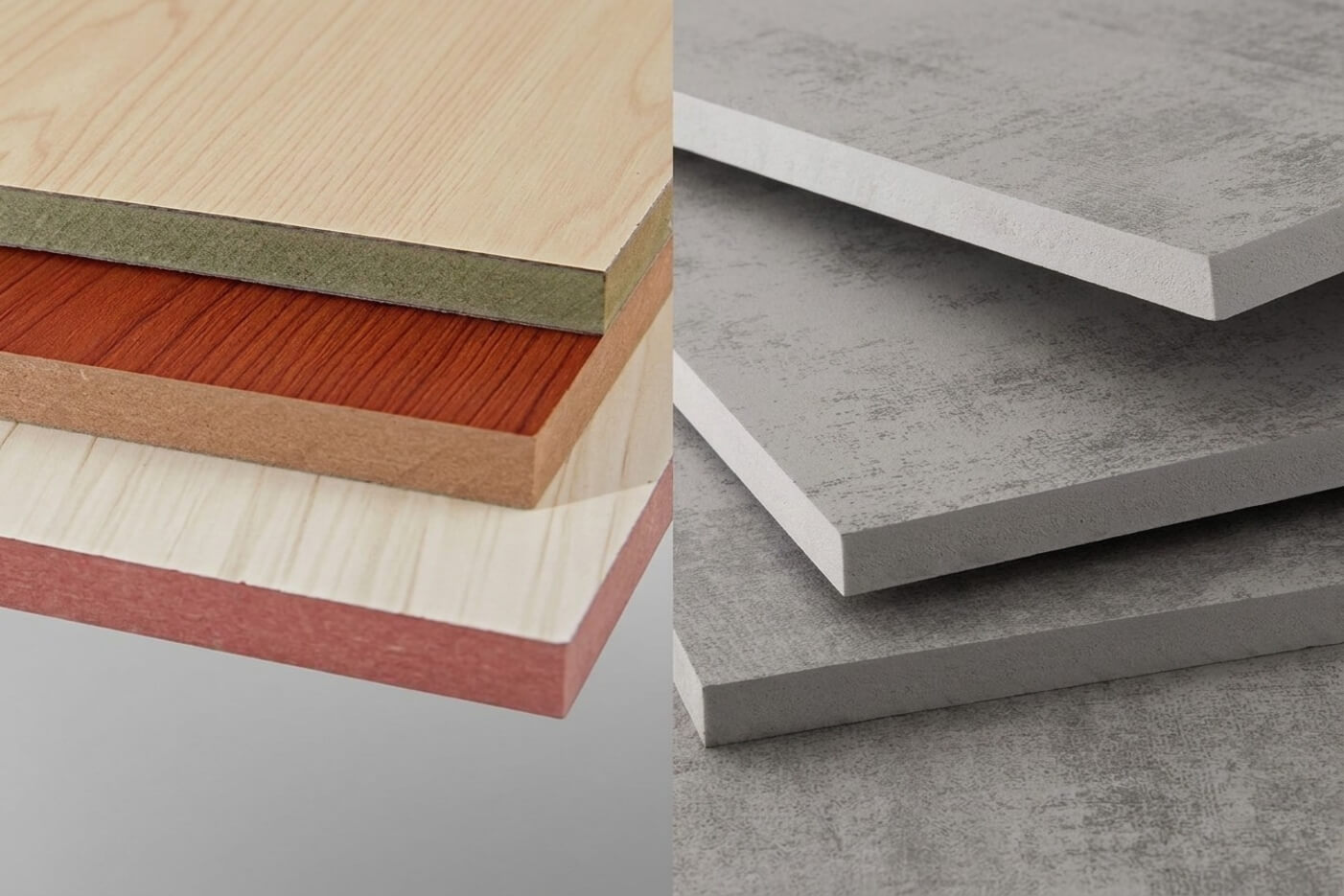
PVC Foam Board vs MDF: Which is better for Indian interiors?
For moisture-prone Indian environments, PVC Foam Board is generally the more suitable choice when water resistance, termite resistance, and low maintenance are priorities. However, MDF can still be useful for specific dry-area applications.
Let's compare them in detail.
What Is PVC Foam Board?
PVC Foam Board is a lightweight rigid sheet made from polyvinyl chloride (PVC) with a foamed structure. Unlike traditional wood-based boards, it does not rely on natural wood fibres as its primary structural material.
High-quality PVC Foam Boards are commonly used for:
- Modular kitchen cabinets
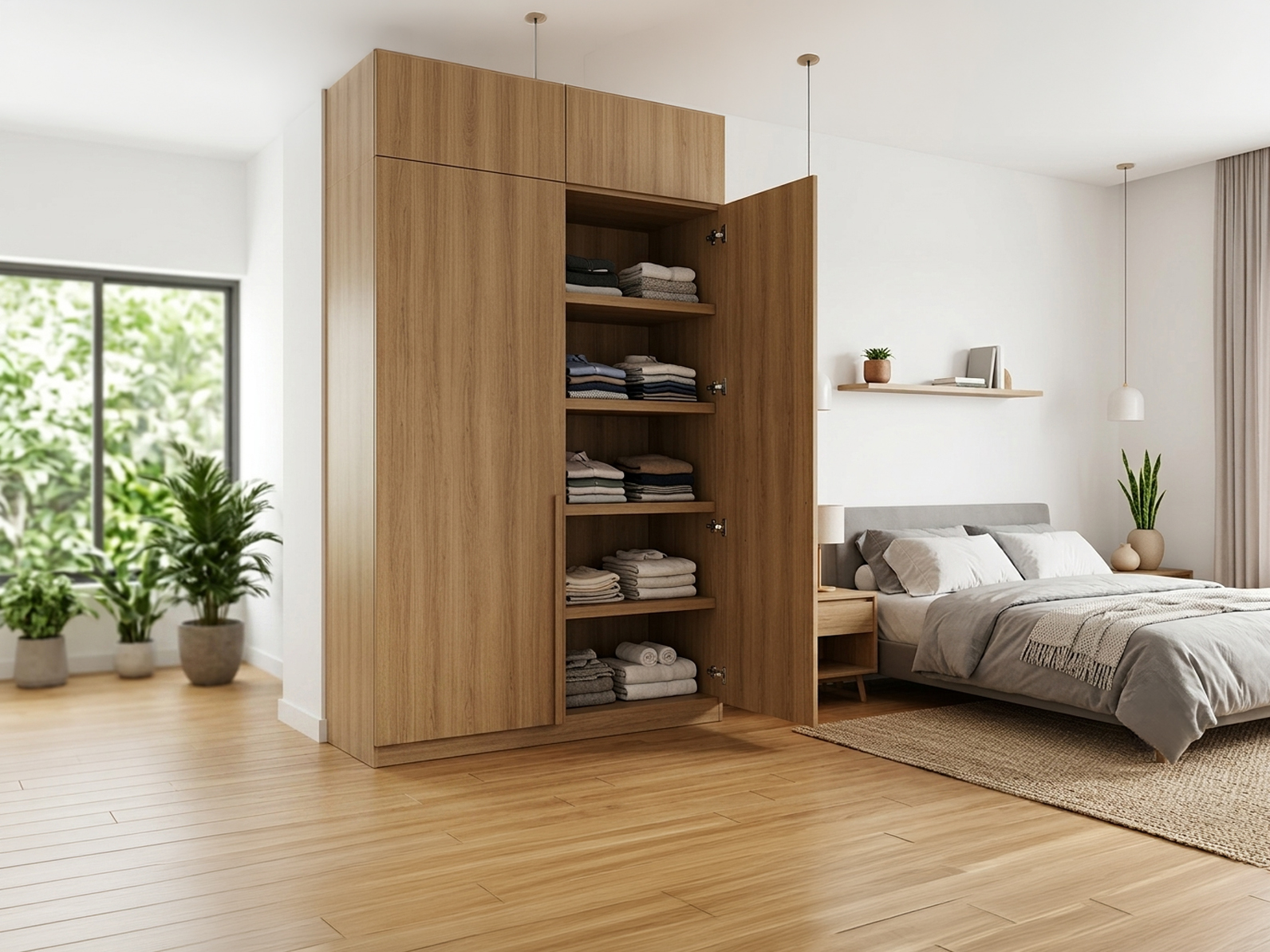
- Wardrobes
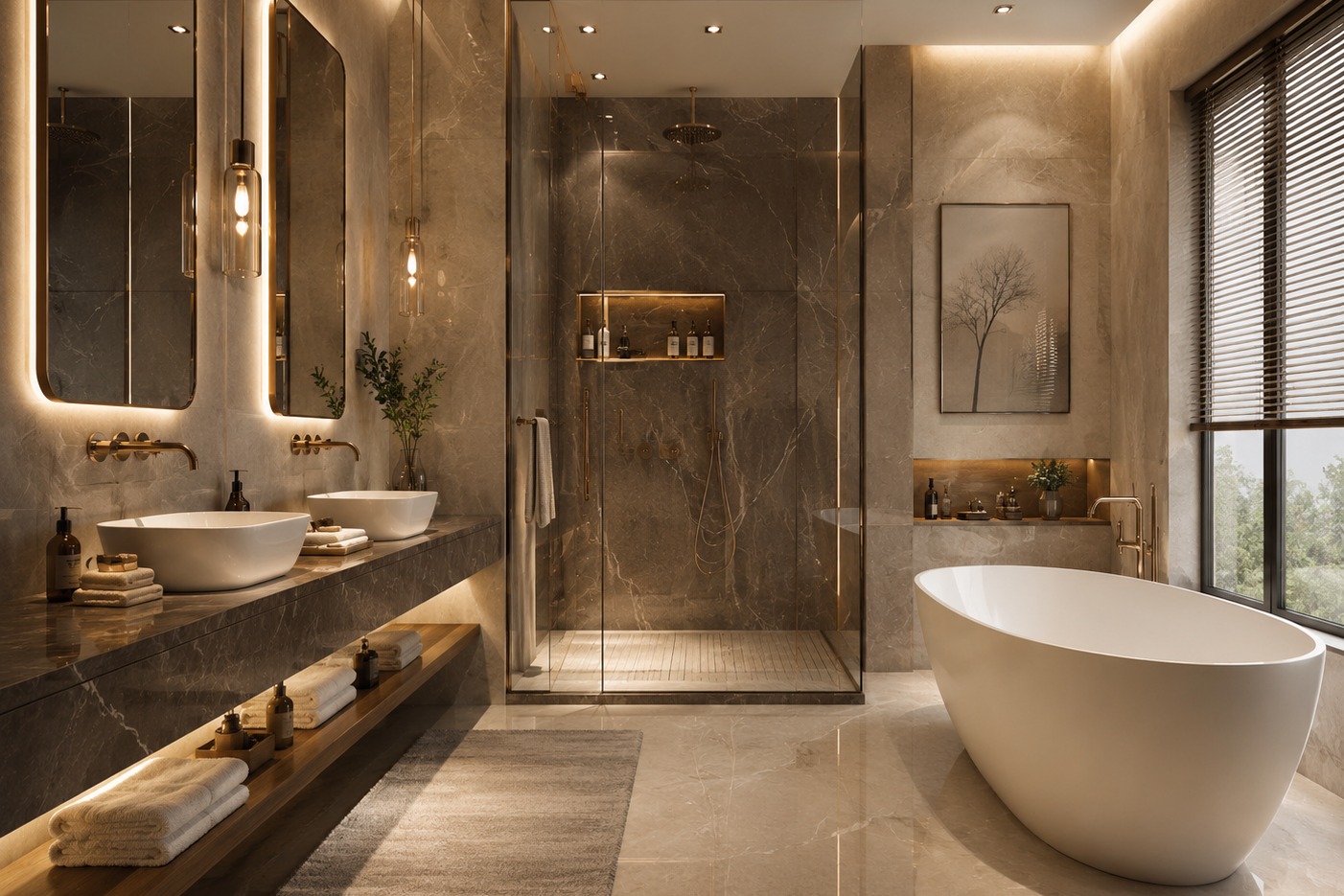
- Bathroom vanities
- Storage units
- Wall panels
- Furniture
- Partitions
- Commercial interiors
One of the biggest advantages of PVC Foam Board is its resistance to moisture and termites, making it particularly useful in humid regions of India.
What Is MDF?
MDF stands for Medium-Density Fibreboard. It is manufactured by breaking wood fibres down into fine particles and combining them with resin and pressure to form a dense, smooth board.
MDF is popular in interior design because it:
- Has a smooth surface
- Is easy to machine
- Works well for decorative designs
- Is widely available
- Is generally cost-effective
- Can be painted or laminated
However, because MDF is made primarily from wood fibres, standard MDF is vulnerable to moisture. Prolonged exposure to water can cause swelling, deformation, and deterioration.
PVC Foam Board vs MDF: Key Differences
The right material depends on where and how you plan to use it. Here's a simple comparison:
|
Feature |
PVC Foam Board |
MDF |
|
Moisture resistance |
Excellent |
Low to moderate* |
|
Water resistance |
Excellent |
Poor |
|
Termite resistance |
Yes |
Requires protection |
|
Rot resistance |
Excellent |
Can deteriorate with moisture |
|
Maintenance |
Low |
Moderate |
|
Humid environments |
Highly suitable |
Limited |
|
Surface finish |
Smooth |
Very smooth |
|
Fabrication |
Easy |
Easy |
|
Weight |
Lightweight |
Relatively heavier |
|
Kitchen applications |
Highly suitable |
Suitable with protection |
|
Bathroom applications |
Highly suitable |
Not recommended for wet exposure |
|
Furniture applications |
Excellent |
Excellent for dry areas |
*Performance varies by MDF grade and protective treatment.
Why PVC Foam Board Is Better for Humid Indian Interiors
India has diverse climatic conditions. From Kerala's monsoon humidity to coastal areas and regions with high seasonal moisture, interior materials often need to handle challenging environments.
PVC Foam Board offers several advantages in these conditions.
1. Excellent Moisture Resistance
Moisture is one of the biggest threats to wood-based boards. Standard MDF can absorb moisture through exposed edges and damaged surfaces. Once water reaches the fibre structure, swelling and deterioration can occur.
PVC Foam Board has a closed-cell structure that provides strong resistance to moisture penetration.
This makes it suitable for:
- Kitchen cabinets
- Under-sink units
- Bathroom vanities
- Utility areas
- Coastal homes
- Humid climates
2. Termite Resistance
Termites can be a major concern for furniture and interior woodwork. Because PVC Foam Board is not a conventional wood-fibre board, it does not provide termites with the same food source as wood-based materials.
This makes termite-resistant PVC boards a practical option for long-term furniture and cabinetry.
3. Better Choice for Wet Areas
MDF is generally better suited to dry interiors. PVC Foam Board, on the other hand, can be used in areas where occasional water exposure is expected.
Examples include:
Kitchen → Bathroom → Utility Area → Wash Area → Coastal Interiors
For bathroom vanities and under-sink cabinets, moisture resistance can be especially important.
Where MDF Still Makes Sense
Choosing PVC Foam Board doesn't mean MDF has no place in interior design. MDF can be a good option when the application is primarily decorative and located in a dry indoor environment.
For example:
- Decorative wall panels
- Painted furniture
- Bedroom furniture
- Decorative partitions
- Dry-area storage
- CNC-cut decorative elements
MDF's smooth surface makes it particularly popular for painted and routed designs. The key is to match the board to the environment.
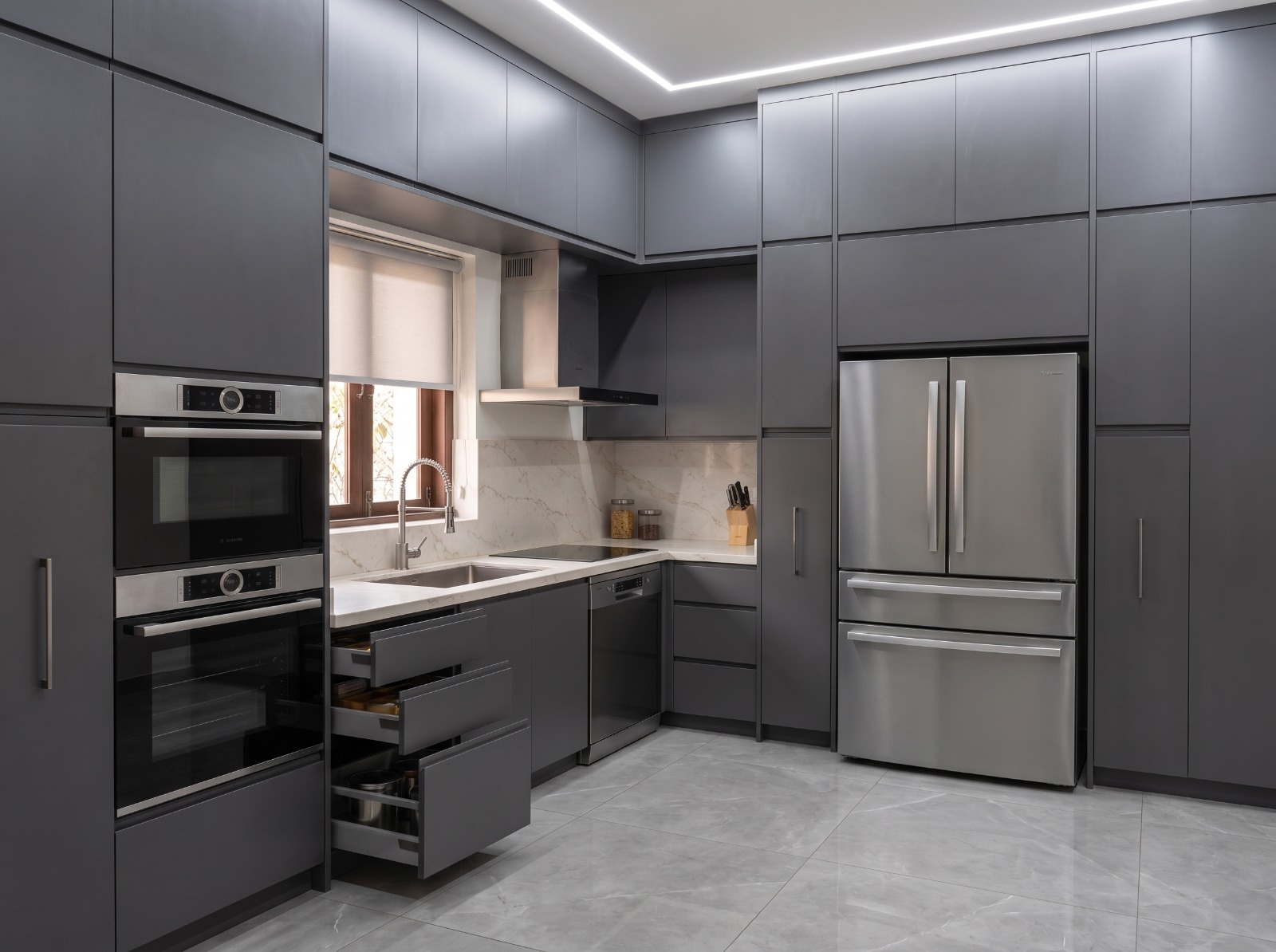
PVC Foam Board vs MDF for Modular Kitchens
The kitchen is one of the most demanding areas of a home.
Cabinets can encounter:
- Water splashes
- Steam
- Oil
- Cleaning chemicals
- Humidity
- Temperature changes
- Frequent opening and closing
For these conditions, PVC Foam Board has a significant advantage because of its moisture-resistant and termite-resistant characteristics.
For kitchen carcasses
A high-density PVC Foam Board can provide a durable substrate for cabinet construction.
For shutters
PVC boards can be fabricated and finished according to the desired kitchen design.
For under-sink cabinets
PVC Foam Board is particularly useful because this area has a higher possibility of water exposure.
PVC Foam Board vs MDF for Bathrooms
For bathrooms, the difference becomes even more important.
MDF is generally not the first choice for areas exposed to continuous moisture because water can compromise the fibre structure.
PVC Foam Board is better suited for:
- Bathroom vanities
- Under-sink cabinets
- Storage units
- Wall panels
- Moisture-prone furniture
For a bathroom project, moisture resistance should be one of the first material-selection criteria, not an afterthought.
Which Is More Durable?
Durability depends on board quality, thickness, design, fabrication, installation, and application. However, in moisture-prone environments, PVC Foam Board has an important advantage because it does not have the same moisture-related swelling problem associated with standard MDF.
A good furniture-grade PVC Foam Board should also have:
- Consistent density
- Good surface hardness
- Uniform cell structure
- Reliable screw-holding capability
- Appropriate thickness
- Good fabrication performance
For structural furniture applications, board density and thickness should be selected according to the load and design requirements.
Which Is Easier to Maintain?
PVC Foam Board
PVC Foam Board requires relatively low maintenance because its surface is moisture-resistant and easy to clean.
MDF
MDF requires more care around water and moisture. Damaged edges, exposed surfaces, or poor finishing can increase the risk of moisture-related deterioration.
For Indian kitchens and humid interiors, lower maintenance can make PVC Foam Board a more practical long-term option.
Which Board Is Better for Furniture?
Both materials can be used for furniture, but the best choice depends on the application.
Choose PVC Foam Board when you need:
- Moisture resistance
- Termite resistance
- Low maintenance
- Bathroom furniture
- Kitchen cabinets
- Under-sink storage
- Humid-climate performance
- Long-term durability
Choose MDF when you need:
- A smooth surface for painting
- Decorative CNC designs
- Dry-area furniture
- Cost-effective decorative applications
PVC Foam Board vs MDF: Quick Decision Guide
For kitchens: PVC Foam Board
For bathrooms: PVC Foam Board
For humid climates: PVC Foam Board
For under-sink cabinets: PVC Foam Board
For dry bedroom furniture: Both can work
For painted decorative furniture: MDF can be suitable
For moisture-prone commercial interiors: PVC Foam Board is generally preferable
Why Choose Bestwood PVC Foam Boards?
Bestwood offers high-density PVC Foam Boards designed for modern interior and furniture applications.
They are suitable for applications such as:
- Modular kitchens
- Wardrobes
- Bathroom vanities
- Cabinets
- Furniture
- Wall panels
- Storage systems
- Commercial interiors
Bestwood PVC Foam Boards are designed to offer a combination of moisture resistance, termite resistance, durability, workability, and low maintenance.
For projects in Kerala and other humid regions of India, these characteristics make PVC Foam Board a practical alternative to conventional wood-based boards.
Latest Blogs